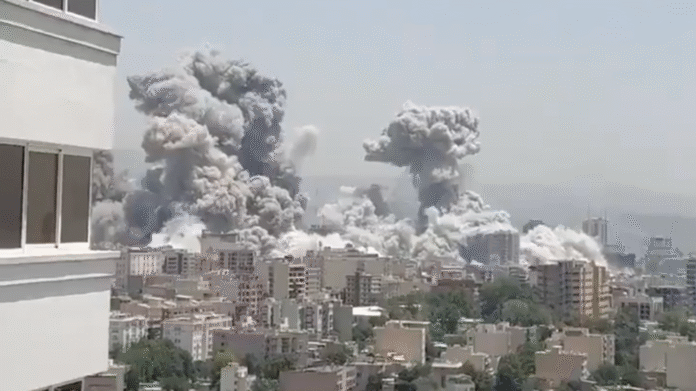
On the 24th day since the outbreak of war in Iran, internet access in the country remains severed. Over the past several days, internet service in Iran has deteriorated to a new level of severe disruption. At the same time, Iranian authorities have blocked a number of domestic websites and intensified threats against media outlets operating outside the country.
The official news agency of Iran’s Judiciary, Mizan, reported that a number of “media outlets, media personalities, journalists, online activists, and celebrities” have faced judicial and security measures on charges of what the Judiciary described as “cooperating and aligning with the enemy.” According to Mizan: “Measures taken so far include legal proceedings for asset seizure, opening judicial files, arrests, bans on activities, temporary blocking of some news websites, and the suspension of one news agency.” The report did not disclose the names of the journalists or media entities subjected to these measures.
Previously, Iran’s Ministry of Intelligence, the Judiciary, and various military and propaganda officials had, in statements and speeches, labeled photographing or filming war-related damage inside Iran as a “criminal act.”
According to reports, over recent days, access has gradually been cut off even for some individuals close to the Islamic Republic who previously used “classified internet” (prioritized or whitelisted connections) to reach social media platforms. Concurrently, there have been reports of disruptions in domestic communication networks.
Amid escalating cyberattacks targeting Persian-language media outside Iran, the Islamic Republic has increased transnational threats against opposition media. Yesterday, the IRGC-affiliated news agencies Fars and Tasnim claimed that accounts linked to the “Vahid Online” media outlet had been hacked, and information allegedly revealing connections to foreign intelligence agencies had been obtained. These outlets further stated that “the team associated with this account (Vahid Online)” had been targeted by an Iranian missile strike.
In response, the Vahid Online channel on Telegram denied the allegations, describing itself as “an ordinary citizen” and rejecting any affiliation with any particular group or entity.
Over the past few days, Iranian state media have repeatedly reported the arrest of citizens who sent news and images to Iran International television. These outlets also reported arrests of individuals in various cities for using Starlink to connect to the internet. The British Deputy Foreign Secretary, responding to the IRGC’s threat to target “Iran International’s infrastructure,” stated in the House of Lords that the UK government would examine the matter.
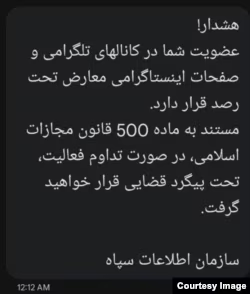
At the same time, Iran’s security and judicial institutions have widely sent SMS messages to Iranian citizens, declaring any filming of war-related damage, its publication on social media, or its transmission to foreign media as a “crime.” In some messages, citizens have been threatened with judicial action simply for being members of Telegram channels or Instagram pages belonging to opposition media outlets or political activists.
Parallel to the ongoing war between Iran and the U.S.-Israel coalition, Israel and several Middle Eastern countries have also imposed severe restrictions on the publication of images and videos depicting war damage. Several satellite imagery providers have likewise restricted public access to images of conflict zones.
Iran has now entered the 24th day of military attacks by Israel and the United States. From the very first day of the war, the Islamic Republic has cut off internet access across the country. Network communications continue to suffer severe disruptions, news dissemination remains unidirectional—controlled exclusively by the Islamic Republic’s propaganda apparatus—and independent and free reporting has effectively been halted.