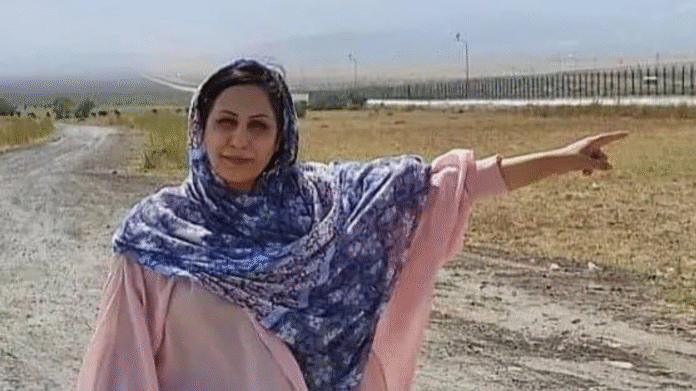
Despite approximately 20 days having passed since her arrest, Iranian journalist Azam Mohebbi remains in custody at the IRGC Intelligence Organization’s detention facility. Ms. Mohabbi is the managing editor of the website “Madar Sharghi”.
Azam Mohebbi was arrested about 20 days ago by the IRGC Intelligence Organization while she was in Kurdistan Province to prepare a report. According to reports, the journalist has gone on a hunger strike due to her unlawful detention in the IRGC detention center in Urmia.
Azam Mohebbi is a social affairs reporter who previously collaborated with Persian-language media outlets such as Shargh and Iran. Her arrest coincided with the war involving Iran. More than two weeks after the ceasefire between Iran and the US-Israel coalition, internet access in Iran remains severely disrupted, and the suppression of free journalism continues in the country.
Iran is now experiencing its 55th day of nationwide internet blackout. The Islamic Republic cut off internet access from the very first day of the war and has maintained this unprecedented disruption even after the ceasefire was announced. Alongside the ongoing crackdown on independent reporting inside Iran, financial difficulties facing media outlets and widespread unemployment among journalists have reached a critical level. The seizure of assets belonging to employees of Persian-language media outlets based outside Iran has also entered the enforcement stage. At present, news dissemination inside Iran is conducted solely through the Islamic Republic’s state propaganda apparatus, while independent and free journalism has been effectively halted.
Since the beginning of the US-Israel war against Iran, Iranian citizens have been experiencing the most severe disruption in the free flow of information in the history of the Islamic Republic. This situation, in terms of scale, duration, and intensity, is incomparable even to previous nationwide protests or earlier periods of internet shutdowns. Current conditions in Iran can no longer be adequately documented using any of the traditional indicators for measuring press freedom and suppression. The internet blackout, widespread restrictions on independent narratives, and judicial and security actions against Iranian media outlets and journalists—both inside the country and abroad—have effectively plunged Iran into a state of total informational blackout.