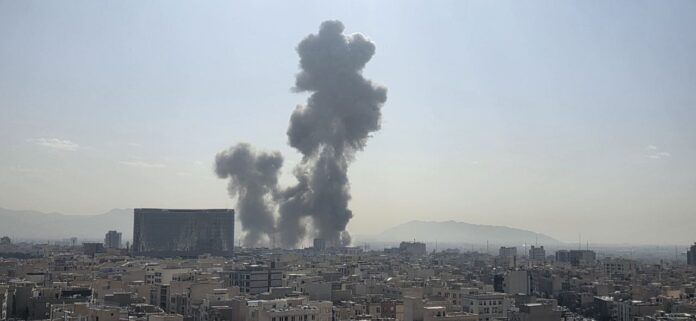
The United States and Israel launched extensive aerial attacks against Iran on the morning of Saturday, February 28, 2026. Simultaneously, a number of Iranian government websites were hacked and taken offline for users. Hours later, the Iranian government cut off internet access across the country.
On Monday morning, political centers and military bases in various Iranian cities—including Tehran—were targeted by missile and aerial strikes carried out by the United States Armed Forces and Israel. Initial reports indicate extensive damage to Iranian political and military sites.
Concurrent with the outbreak of war, the official state news agency of Iran (IRNA), the Iranian Students’ News Agency (ISNA, state-affiliated), the Tabnak news website, the Asr-e Iran news website, the Rokna news website, and several Iranian applications were subjected to cyberattacks. These platforms were either rendered inaccessible to users or displayed messages posted by hackers. The official state news agency IRNA resumed operations hours after the cyber incidents.
Hours after the war began, the Iranian government imposed a nationwide internet blackout. According to NetBlocks, the global internet observatory, Iran is currently experiencing a near-total internet shutdown, with international connectivity reduced to approximately 4% of normal levels.
Internet shutdowns in Iran have become a recurring pattern to disrupt the free flow of information in the country. The Islamic Republic previously imposed a nationwide internet blackout during the 12-day war in June 2025. The government has now cut off internet access at a time when Iranian citizens, amid ongoing conflict, are deprived of reliable and essential information.
This renewed internet blackout has heightened concerns about a repeat of events similar to those during the 12-day war. In that conflict, Iran effectively plunged into a media blackout. A new wave of judicial and security crackdowns targeted journalists, media outlets, and independent narrators inside the country. Threats by the Iranian government against Iranian journalists residing abroad escalated alarmingly. In the midst of the war, many Iranian citizens were deprived of timely, accurate, and essential information. Numerous events remained shrouded in ambiguity and confusion for the public, making it difficult for society to analyze realities and make informed decisions. During the Iran-Israel war—known as the “12-Day War”—hundreds of civilians lost their lives in both Iran and Israel. Among the civilian casualties were three Iranian journalists.