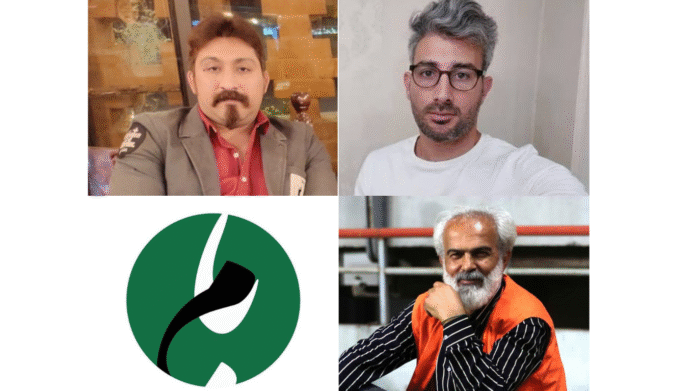
In the latest wave of judicial and security crackdowns on Iranian journalists and media outlets, two more journalists have been arrested, one media outlet has been barred from continuing its activities, and a court hearing was held for another journalist.
According to a report received by the Defending Free Flow of Information (DeFFI), Kianoush Darvishi was arrested on Monday, February 16, 2025, after being summoned to the prosecutor’s office and transferred to Tehran’s Great Prison. This journalist had previously posted on his personal account that, following a summons to the police cyber unit (FATA), his bank accounts had been blocked.
At the same time, security forces arrested Morteza Khezri, a journalist based in Bandar Genaveh in Bushehr Province.
Meanwhile, Hassan Abbasi’s lawyer posted on his personal account that a court session to address the charges against this journalist had been held. In the tweet, Mr. Ali Sharifzadeh Ardakani criticized the extralegal treatment and inhumane detention conditions of his client, writing: “In addition to handcuffs, they had also put leg shackles on him—as if they had brought a serial killer. When I protested, they removed them. His entire back was covered in bedbug bites. If you cannot even maintain basic hygiene in prison, then release people.”
In continuation of the new wave of judicial and security actions against media and journalists in Iran, the news channel “Baamdad-e No” has been prohibited from continuing its activities. In a post on its Instagram page, without naming the authority behind the ban, the channel stated: “Baamdad-e No is barred, until further notice, from publishing any content or engaging in media activities.”
This recent round of judicial and security measures against media outlets, journalists, and independent narrators coincides with the heightened security atmosphere in Iran amid anti-government protests. Due to widespread internet disruptions and the new wave of suppression of independent reporting, the professional activities of many journalists in Iran have faced severe restrictions.
Iran experienced an unprecedented 20-day information blackout—the most extensive in the history of the Islamic Republic. Starting in the early days of 2026, following the spread of anti-government protests across the country, the Islamic Republic of Iran launched a new wave of judicial and security crackdowns on journalists, media outlets, and independent narrators. International internet access was cut off, and extensive disruptions occurred in domestic communication networks—including mobile phones.
According to the annual report of the Defending Free Flow of Information (DeFFI), Iranian journalists and media outlets are experiencing an unprecedented period of security pressure, judicial actions, and deliberate interference in their professional work—a situation the organization has described as a “military deployment against the free flow of information.” Based on the report, in 2025 alone, at least 225 journalists or media outlets faced judicial or security actions; 25 journalists or media managers were sentenced to a total of over 30 years in prison and 293 million tomans in fines; at least 148 new judicial cases were opened against journalists and media outlets; and eight media outlets were shut down.
Update:
Morteza Khazri, a journalist based in Bandar Ganaveh, Bushehr Province, was temporarily released. The journalist had been detained following his publication of a report on anti-government protests in Iran.