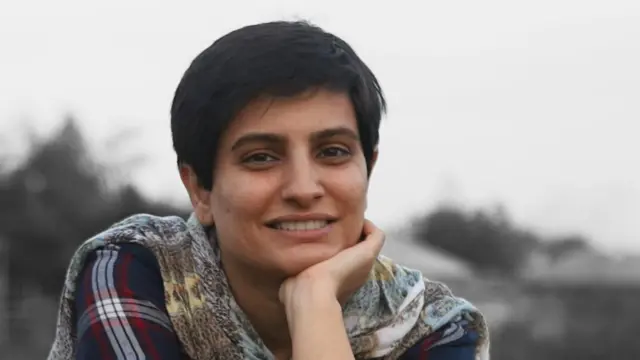
Judicial agents raided the home of journalist Elaheh Mohammadi and confiscated her electronic devices. Following a brief detention, Mohammadi was transferred to Tehran’s Security Prosecutor’s Office and released back to her home a few hours later.
According to a report received by the Defending Free Flow of Information (DeFFI), judicial agents temporarily detained Elaheh Mohammadi on the morning of Wednesday, February 25, 2026. During the raid on her residence, the agents seized her electronic devices. A source familiar with the matter told DeFFI that a new case has been opened against the journalist. She was taken to Security Prosecutor’s Office Branch 33 in Tehran (Evin) for questioning and was released a few hours after her detention.
Elaheh Mohammadi is a social affairs reporter for the newspaper Ham-Mihan. In mid-January 2026, amid ongoing international internet disruptions and widespread interference with the free flow of information in Iran, the country’s Press Supervisory Board suspended Ham-Mihan. More than 40 days later, the newspaper remains shut down.
Since the early days of 2026, following the outbreak of anti-government protests in Iran, a new wave of judicial and security measures has targeted media outlets, journalists, and independent voices. Due to extensive internet disruptions and renewed suppression of independent reporting, the professional activities of many Iranian journalists now face severe restrictions.
Elaheh Mohammadi has previously experienced judicial and security persecution. Together with Niloufar Hamedi, a reporter for Shargh newspaper, she was arrested and tried for publishing reports on the circumstances surrounding the death of Mahsa (Zhina) Amini and her funeral. The two journalists endured approximately 16 months of pretrial detention before being sentenced in a controversial case lacking fair trial standards to long prison terms. Their cases were closed last year.
According to DeFFI’s annual report, Iranian journalists and media outlets are experiencing an unprecedented period of security pressure, judicial actions, and deliberate interference in their professional work—a situation the organization has described as a “militarized Posture against the free flow of information.” The report states that in 2025 alone, at least 225 journalists or media outlets faced judicial or security measures; 25 journalists or media managers were sentenced to a combined total of over 30 years in prison and 293 million tomans in fines; at least 148 new judicial cases were opened against journalists and media; and eight media outlets were suspended.