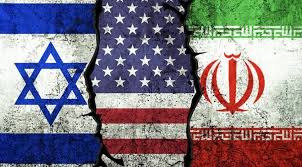
As the ongoing war between Iran and the Israel-United States alliance enters its third day, Iran remains under a nationwide internet blackout for the third consecutive day, with severe and widespread disruptions to free access to information persisting. Yesterday, Iran’s state broadcaster, the Islamic Republic of Iran Broadcasting (IRIB), was targeted in an airstrike.
IRIB reported that parts of its facilities were struck by aerial attacks on the second day of the conflict. Images circulating from Tehran show significant damage to sections of the broadcaster’s buildings. Despite this, IRIB stated that programming has continued as of the time of this report.
Meanwhile, extensive aerial strikes by the United States and Israel against Iran persist. Multiple cities across the country have witnessed missile impacts and repeated explosions. Hundreds of military, political, and security sites in Iran have been targeted by Israeli and U.S. forces. Reports also indicate strikes on a number of hospitals, schools, and civilian areas.
In these U.S. and Israeli attacks, dozens of senior political and military officials—including Supreme Leader Ayatollah Ali Khamenei—have been killed. There are also reports of dozens of civilian deaths, including children, resulting from military strikes inside Iran. In response, the Islamic Republic of Iran has launched missiles and drones at multiple military and security locations in Israel, as well as several U.S. bases in neighboring countries. Some reports indicate civilian casualties and injuries in Iran’s neighboring countries as a result of these exchanges.
The Iranian government has imposed an internet blackout and created extensive obstacles to free information flow at a time when Iranian citizens, amid the war, need reliable and essential information more than ever. Internet shutdowns have become a consistent pattern used by the Islamic Republic to disrupt the free flow of information. During the 12-day war in June 2025, the government similarly enforced a nationwide internet cutoff.
The renewed internet blackout in Iran has heightened concerns about a repetition of events similar to those during the 12-day war. In that conflict, Iran effectively plunged into a media blackout. A new wave of judicial and security crackdowns targeted journalists, media outlets, and independent narrators; transnational threats by the Iranian government against Iranian journalists living abroad escalated alarmingly; many Iranian citizens were deprived of timely, accurate, and essential information in the midst of the war; numerous events led to confusion and uncertainty among the public; and society faced significant challenges in analyzing realities and making informed decisions. During the Iran-Israel war—widely known as the “12-Day War”—hundreds of civilians lost their lives in both Iran and Israel. Among the civilian casualties were three Iranian journalists.