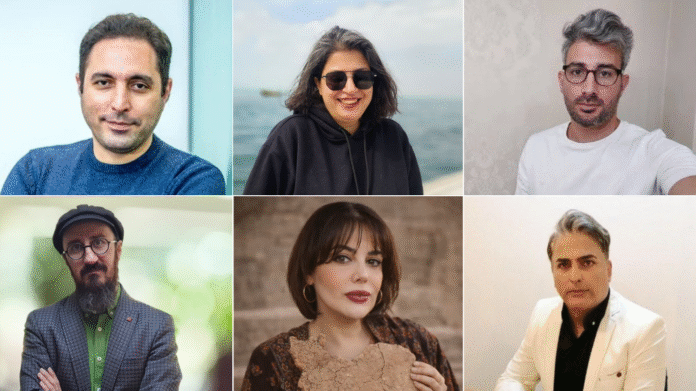
In the latest escalation of judicial and security measures targeting journalists and media outlets in Iran, the SIM cards of at least two journalists have been blocked, personal belongings of at least three journalists have been confiscated by security forces, a journalist’s bank account was frozen following a summons to police, and one journalist was dismissed from their job due to critical posts on social media.
According to reports received by the Defending Free Flow of Information Organization (DeFFI), security forces raided the home of journalist Azadeh Mokhtari and confiscated several personal items, including her mobile phone as well as identity documents such as her passport and national ID cards. A source familiar with the case told DeFFI that Ms. Mokhtari has been banned from using social media platforms.
Rasoul Behravesh, a sports journalist, was dismissed from Hamshahri newspaper after years of collaboration, due to publishing protest-related posts—particularly in connection with the January 2026 protests. In a post on his Instagram page, Mr. Behravesh wrote: “After seventeen years of working with the Hamshahri group and more than ten years on the newspaper’s sports desk, I was dismissed last week. Over recent years and months, I was regularly pressured to refrain from writing or to delete content from my personal page, which I naturally never accepted.”
Meanwhile, Kianoush Darvishi announced via a tweet on his account that his bank accounts were blocked after being summoned to the Police Cyber Unit (FATA). He explained the incident as follows: “FATA called asking why I posted a story about bodies and told me to come explain. I didn’t go. They blocked my bank accounts with a letter from FATA without referring the case to court.”
Security forces also raided the home of Mohammad Parsi, a Tehran-based media activist, and seized electronic devices belonging to him and his family. Previously, IRGC Intelligence agents had entered the home of news photographer Yalda Moayeri and confiscated several of her electronic devices.
In a pattern of repression that has intensified sharply over the past year, the SIM cards of at least two other Iranian media activists were unlawfully blocked in recent days: Elaheh Khosravi, a journalist and producer of the Gazet podcast, and Hamed Bidi, a media activist and CEO of the Karzar Shahrvandani platform.
According to DeFFI’s annual report, Iranian journalists and media outlets are experiencing an unprecedented period of intensified security pressures, judicial actions, and deliberate interference in their professional activities—conditions the organization has described as a “military posture against the free flow of information.” The report highlights unlawful SIM card blocking as a recurring pattern in 2025 targeting journalists and political activists, in which mobile operators deactivated citizens’ SIM cards without judicial warrants or prior notice.
While several journalists told DeFFI they were unaware of the entity responsible for blocking their SIM cards, DeFFI research indicates that the deactivation of SIM cards belonging to political activists and journalists in Iran is primarily carried out on the orders of the “Cyber Security Command of the Islamic Revolutionary Guard Corps (Gardab),” an entity affiliated with IRGC Intelligence.
This new wave of judicial and security actions against media and journalists coincides with the heightened security atmosphere in Iran stemming from anti-government protests. Widespread internet disruptions and the renewed crackdown have severely restricted the professional activities of many Iranian journalists. At least four journalists or news photographers remain in detention in connection with the January 2026 protests: Pedram Alamdari and Somayeh Heydari in Tabriz, Hassan Abbasi in Bandar Abbas, and Artin Ghazanfari in Mashhad. The continued suspension of Ham-Mihan newspaper has now entered its third week.