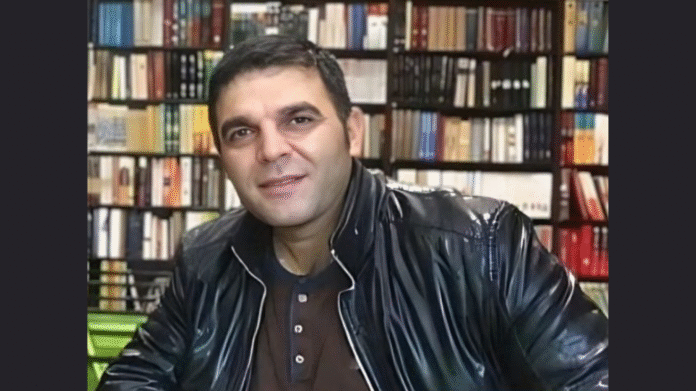
Omid Faraghat, a journalist held in Karaj Central Prison, has been sentenced by a court to 10 years and one day imprisonment.
The sentence was issued under Article 4 of the Law on Intensifying the Punishment for Espionage and Cooperation with Hostile Countries -legislation enacted after the Iran–U.S.–Israel coalition war. The ruling was handed down while Faraghat remains in custody at Karaj Central Penitentiary.
On Sunday, 28 June 2026, Faraghat announced via a tweet that he had been summoned by the Cyber Security Police. The following day, after appearing at the Public and Revolutionary Prosecutor’s Office, he was arrested and transferred to prison. Following his detention, the journalist was charged with “disseminating false information with the intent to disturb public opinion” and “assembly and collusion to act against national security.”
Faraghat has previously faced judicial and security measures. According to the annual report of the Defending Free Flow of Information (DeFFI), Iranian journalists and media outlets are experiencing an unprecedented period of security pressure, judicial actions, and targeted disruption of professional activities -a situation the free-expression advocacy group has described as a “military posture against the free flow of information.” The report states that in 2025 alone, at least 225 journalists or media outlets faced judicial or security measures; 25 journalists or managing editors were collectively sentenced to more than 30 years in prison and fined 293 million tomans; at least 148 new judicial cases were opened against journalists and media outlets; and eight media outlets were shut down.