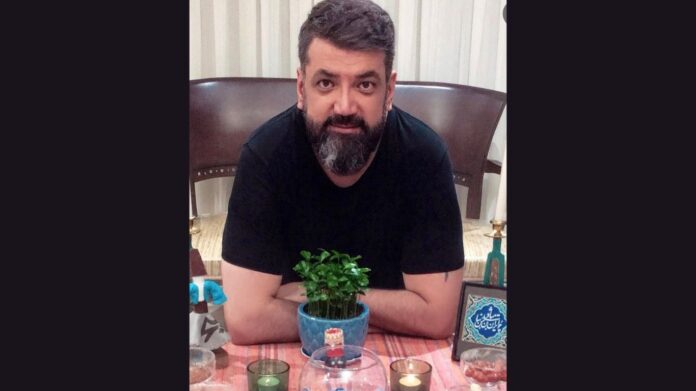
Tehran’s Revolutionary Court has sentenced Artin Ghazanfari, a photojournalist and Baha’i citizen held in Greater Tehran Prison, to a total of 26 years in prison.
Branch 15 of Tehran’s Revolutionary Court, presided over by Judge Abolqasem Salavati, handed down the sentence. Ghazanfari was convicted of “media activity” against the Islamic Republic (20 years), “assembly and collusion to act against national security” (5 years), and “propaganda against the system” (1 year).
Although the prescribed penalty for “media activity” against the Islamic Republic is 10 years’ imprisonment, the judge applied the law on intensifying penalties for espionage to impose a 20-year term.
If the verdict is upheld on appeal, the 20-year sentence -as the most severe penalty- will be enforceable. Ghazanfari remains in temporary detention while suffering from heart failure, high blood pressure, and asthma.
Security forces arrested him at his home on Tuesday, 19 January 2026. During the arrest they searched the residence and seized a number of his professional equipment. Ghazanfari is a follower of the Baha’i faith.
His arrest coincided with a wave of security and judicial crackdowns on journalists and media outlets that began after anti-government protests erupted in Iran. In the first month of 2026, the country experienced one of the most unprecedented information blackouts in the history of the Islamic Republic, lasting roughly 20 days. Following the spread of the protests, the authorities launched a new wave of judicial and security measures against journalists, media organizations, and independent narrators, severed access to the international internet, and imposed widespread disruptions on domestic communication networks, including mobile phones. These conditions intensified roughly a month later after the outbreak of war between Iran and the U.S.-Israel coalition.