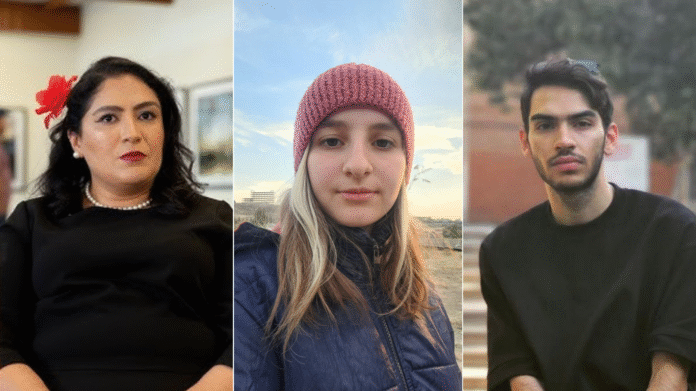
Security forces have arrested Pedram Alamdari, editor-in-chief of the student publication Yol, and Somayeh Heydari, a member of its editorial team. Additionally, agents from the IRGC Intelligence Organization entered the home of Yalda Moayeri, confiscated several pieces of her professional equipment, and summoned the news photographer to Evin Courthouse.
The United Students Media — an outlet that reports on news concerning Iranian universities and students — reported the arrests of Somayeh Heydari and Pedram Alamdari. According to the outlet: “Pedram Alamdari, a physics student at the University of Tabriz and editor-in-chief of the banned student publication Yol, was arrested by security forces at his private residence on the evening of Sunday, 1 February 2026.” The report states that during the arrest, officers also seized and took away Alamdari’s mobile phone and laptop. Somayeh Heydari was arrested the following day, 2 February 2026, with her mobile phone and laptop likewise confiscated by the authorities.
On Tuesday, 3 February 2026, IRGC Intelligence officers entered the home of Yalda Moayeri, conducted a search, confiscated several electronic devices—including her mobile phone, laptop, and computer—and summoned the news photographer to the Tehran Sacred Prosecutor’s Office (Evin).
The arrests of Pedram Alamdari and Somayeh Heydari, along with the seizure of professional equipment from these two journalists and from Yalda Moayeri, are taking place amid a heightened security atmosphere in Iran due to anti-government protests. Widespread internet disruptions combined with a new wave of judicial and security crackdowns have severely restricted the professional activities of many journalists in the country.
Iran has experienced an unprecedented 20-day information blackout—the longest in the history of the Islamic Republic. Starting in the early days of 2026, following the widespread outbreak of anti-government protests, the Islamic Republic of Iran launched a renewed wave of judicial and security measures targeting journalists, media outlets, and independent narrators. International internet access was severed, and extensive disruptions affected domestic communication networks, including mobile phones.
According to the annual report of the Defending Free Flow of Information Organization (DeFFI), Iranian journalists and media are enduring an exceptionally intense period of security pressure, judicial action, and deliberate interference in professional activities—a situation the press freedom advocacy group has described as a “military posture against the free flow of information.” The report states that in 2025 alone, at least 225 journalists and/or media outlets faced judicial or security measures; 25 journalists or media directors were sentenced to a combined total of more than 30 years in prison and 293 million tomans in fines; at least 148 new judicial cases were opened against journalists and media; and eight media outlets were shut down.