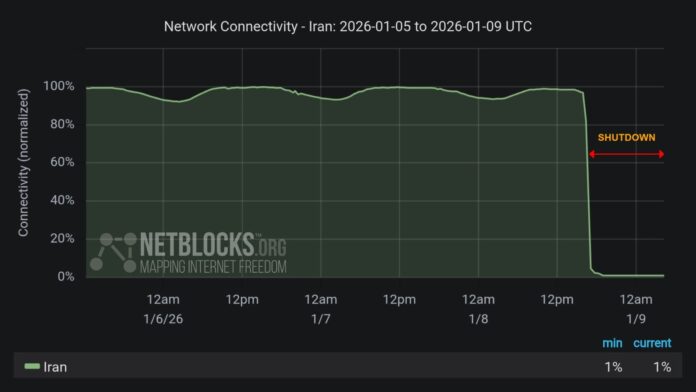
The Islamic Republic of Iran has severed international internet connectivity and caused extensive disruption to domestic communication networks — including mobile phone services — amid the widespread outbreak of anti-government protests across the country. The internet blackout and severe communication disruptions began yesterday and continue at the time of this report.
According to preliminary data from NetBlocks, the global internet observatory, Iran is currently experiencing a near-total nationwide internet blackout, with international connectivity reduced to approximately 1% of normal levels. Live metrics on Thursday, 8 January 2025 indicated the occurrence of a full-scale internet shutdown across the country. This event follows a series of digital censorship measures targeting the ongoing nationwide protests. NetBlocks has stated that this internet blackout constitutes a deliberate effort to prevent the dissemination of information related to the protests.
In a subsequent update, NetBlocks — which continuously monitors global connectivity — reported on Friday, 9 January 2025 that Iran has remained effectively offline for over 12 hours, with national connectivity levels remaining near 1%. The chart published by NetBlocks shows a dramatic collapse in connectivity beginning on 8 January, dropping from near 100% to close to zero, where it has remained.
This disruption forms part of an intensified campaign of censorship and digital blackout in Iran aimed at containing the nationwide protests and concealing reports of indiscriminate violence against citizens.
s anti-government demonstrations continue across Iran, organized interference with independent information flow persists. The Islamic Republic is employing multiple tactics to restrict citizens’ access to accurate and timely information, including: Summoning journalists to security agencies, Holding “guidance” meetings with media outlet managers, Severe internet disruption, Production of parallel state narratives.
28 December 2025, Tehran’s Grand Bazaar witnessed a strike by shopkeepers and street protests against the sharp rise in the dollar exchange rate and the deepening economic crisis. These protests gradually spread to other parts of Tehran and numerous other cities across Iran and continue at present.
Over the past 12 days, large-scale anti-government demonstrations have taken place in Tehran’s bazaar, several neighborhoods of the capital, numerous universities, and various cities throughout the country. What began as protests focused on the economic crisis quickly acquired a clear political character, with slogans directly targeting Ali Khamenei, Supreme Leader of the Islamic Republic, and the ruling system becoming a prominent feature of the demonstrations.
The response of the Islamic Republic’s law enforcement and security forces to these protests has been characterized by the use of indiscriminate and excessive violence. Initial reports indicate that dozens of protesting citizens have been killed or seriously injured.